
This article has links to products and services we recommend, which we may make a commission from.
Paella is one of Spain’s most famous dishes, and it is originally from the Valencia region.
We spent several months in Valencia exploring the local cuisine. One of our favorite activities was learning how to make authentic Valencia paella in a cooking class.
As paella is one of Spain’s most celebrated dishes, taking cooking classes in Valencia should not be missed.
In this review, we share our Valencia paella cooking class experience. We also highlight two alternative cooking classes that include seafood and more.
Get ready to start cooking in Valencia, Spain.

Top Cooking Classes Valencia
In Valencia, the capital of paella, taking a cooking class is an unmissable experience. Having fallen in love with and eaten paella several times, we wanted to learn how to make it.
This Valencian paella workshop with market visit caught our attention and we booked it immediately.
This class offered exactly what we were looking for. A morning cooking class with a visit to the local market.
In our research, we also came across two other highly-rated cooking classes in Valencia worth mentioning.
- Evening paella cooking class with sangria: This paella cooking class takes place in the evening, starting at 5:00 pm. Beyond learning how to make paella, you also learn to make Sangria to enjoy with your meal.
- Seafood paella cooking class: If you’re a seafood lover, you’ll enjoy learning how to make a twist on traditional paella by adding fish, seafood, and seafood broth. This class also includes a local market visit.
Overview Paella Cooking Class in Valencia
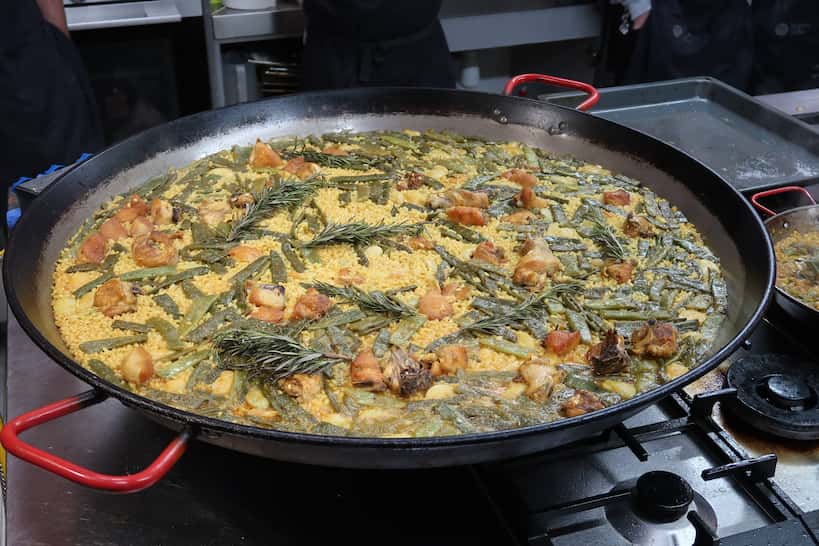
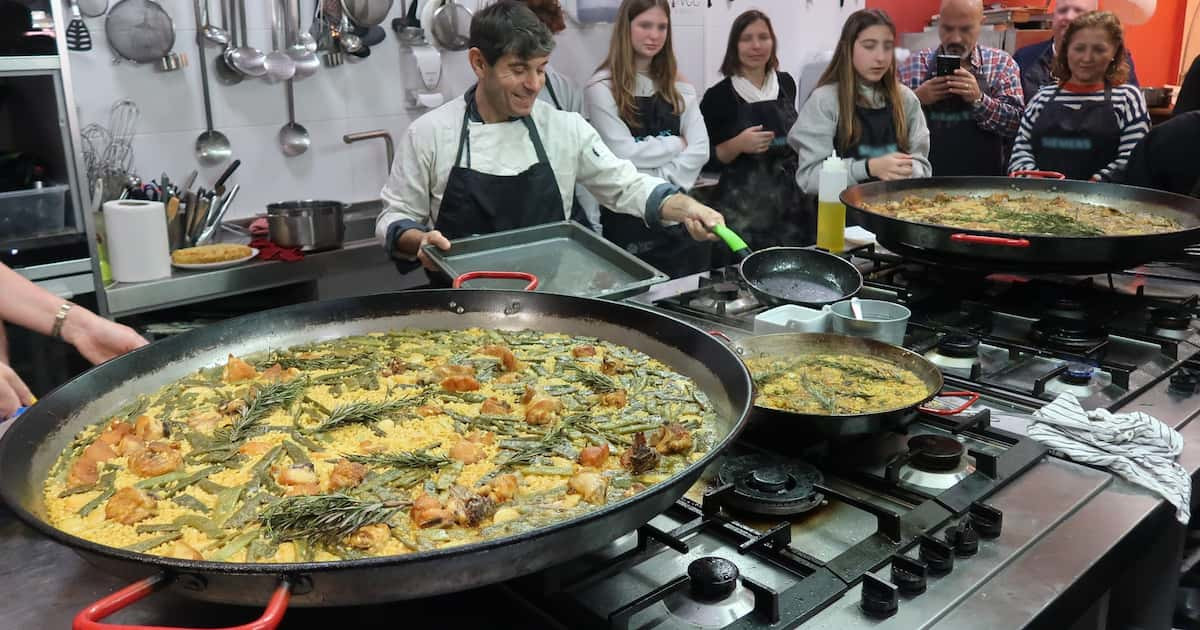
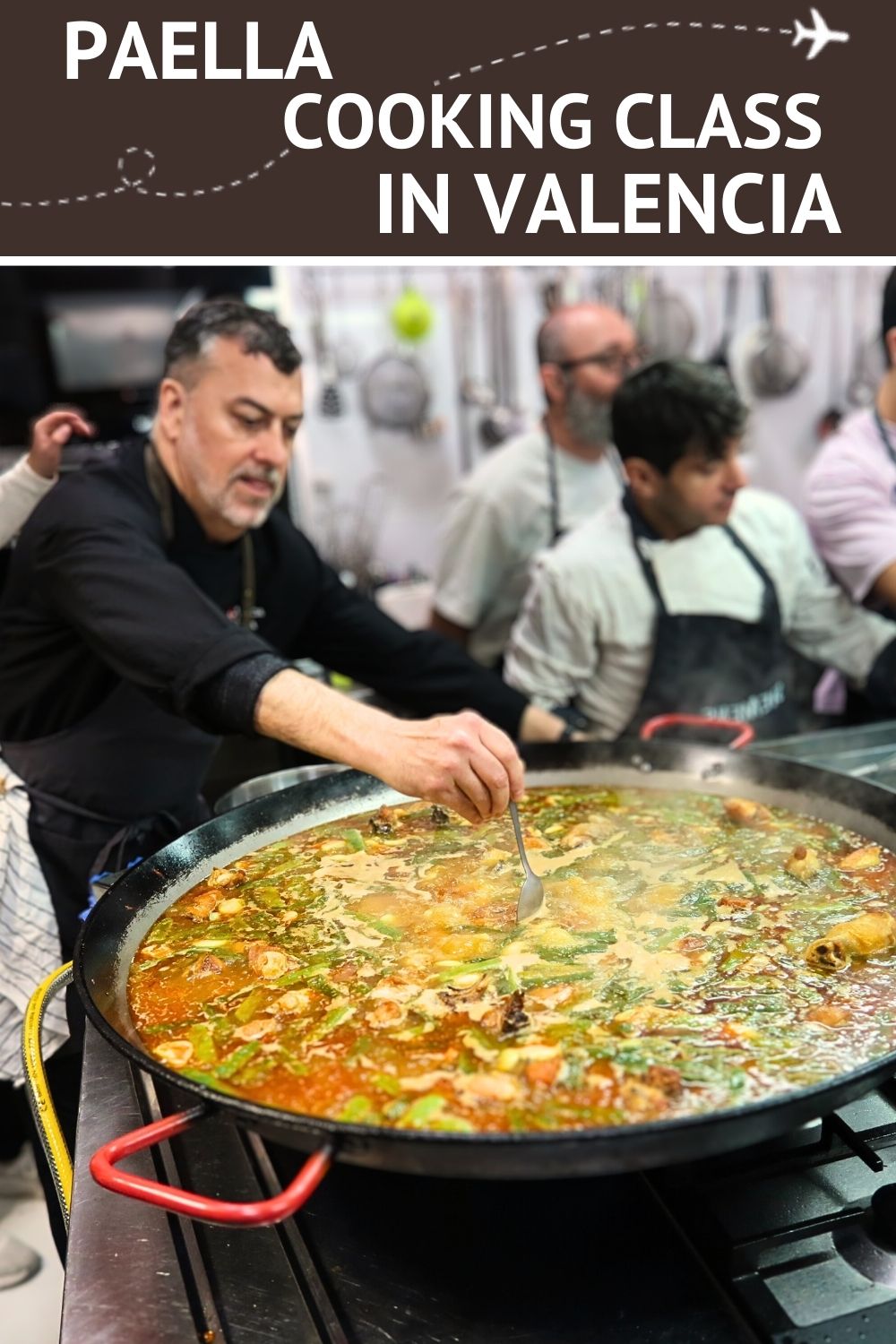
The size of the paella pans in the professional kitchen surprised us as we were getting settled for our Valencian paella cooking class.
The cooking stations, neatly arranged and spotless all faced the giant paella pans.
In this 2.5 to 3-hour cooking class, you’ll learn to make paella and dive into the culinary heritage of the dish.
The experience starts with visiting the local market to learn about the traditional ingredients,
Back in the cooking studio, you’ll be welcomed with Sangria and tapas. You’ll learn to make a Spanish omelet for a starter, Valencian paella, and an easy coca de llanda dessert.
Plan to have fun and work as a team as you make giant-sized Valencia paella.
Highlights Of Our Cooking Class
Algiros Market Visit
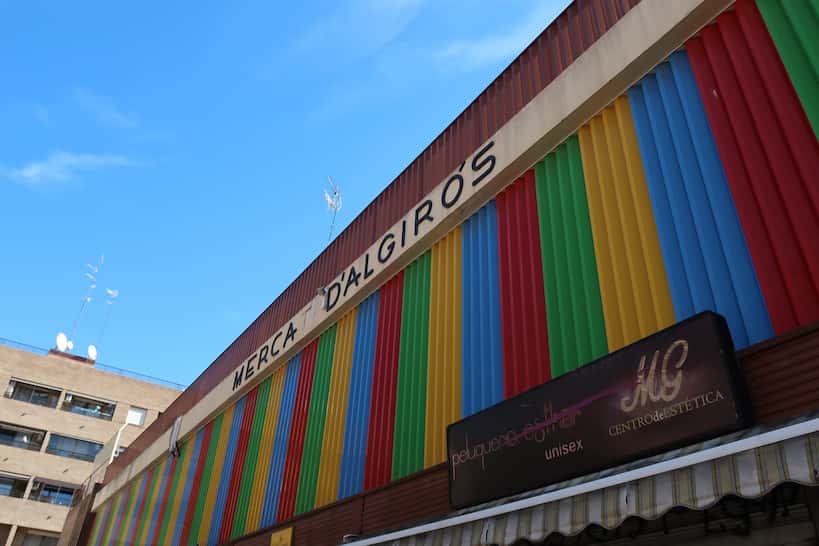
Visiting a local farmers market to pick up for a cooking class really enhances the experience.
Before starting to cook, Luis, one of the chefs, took us on a guided tour of the nearby farmers market.
As we walked through the market, Luis stopped at a few different market stands where we picked up the ingredients for the paella.
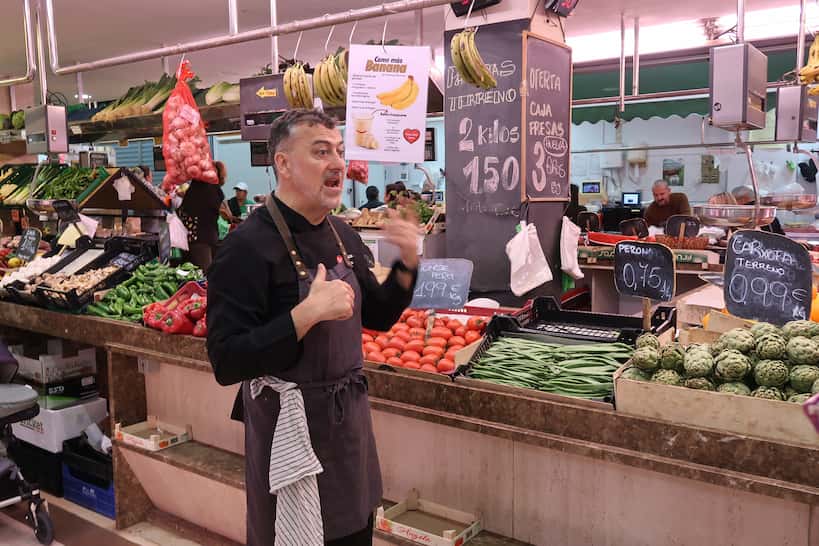
It was wonderful seeing all the fresh and vibrant seasonal produce and meeting some of the local vendors.
Then, it was back to the cooking studio for our Valencian paella cooking class.
An Easy Spanish Dessert Coca en Llanda
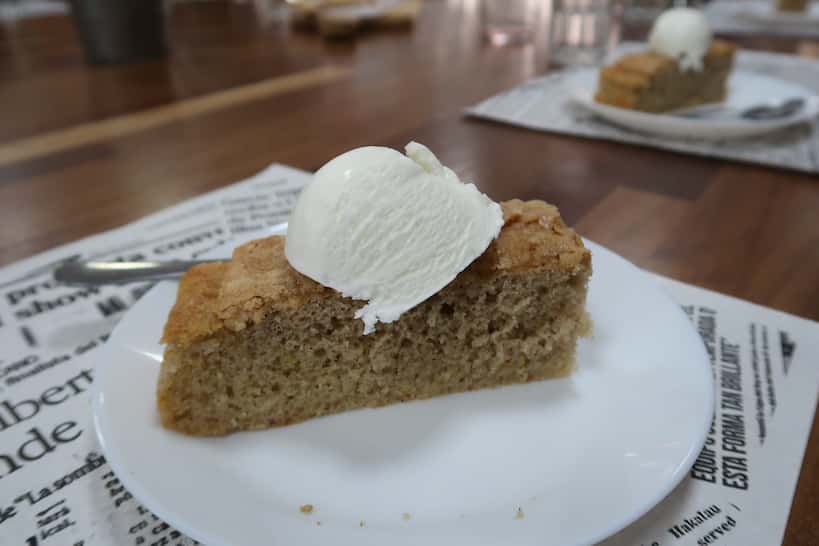
Working as a group, we all started off by making a simple, everyday Spanish dessert.
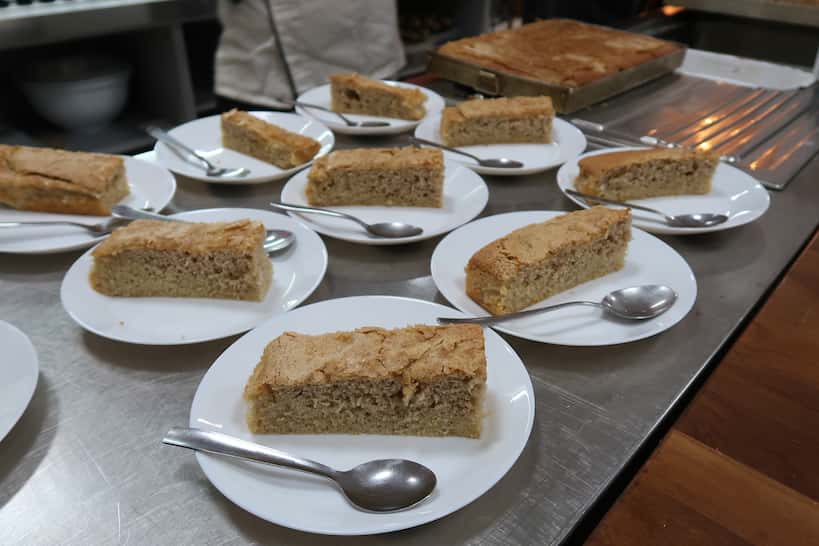
This typical Valencia dessert, known as Coca en Llanda, is a simple lemon-flavored sponge cake.
Some people in the group worked on grating the lemon for lemon zest. While others beat or whisked the egg whites and sugar.
As we had fun mixing all the ingredients, we also learned more about the origins of the cake.
The name coca en llanda, also spelled coca de llanda, takes its name from the rectangular pan it is cooked in.
It’s a typical Valencian cake eaten as a snack or merienda and pairs especially well with coffee.
AUTHENTIC FOOD QUEST TIP: If your travels take you to San Sebastian in northern Spain, consider taking a Basque cooking class. See our detailed review of the Top Cooking Class in San Sebastian to Taste Basque Flavors
Paella Making
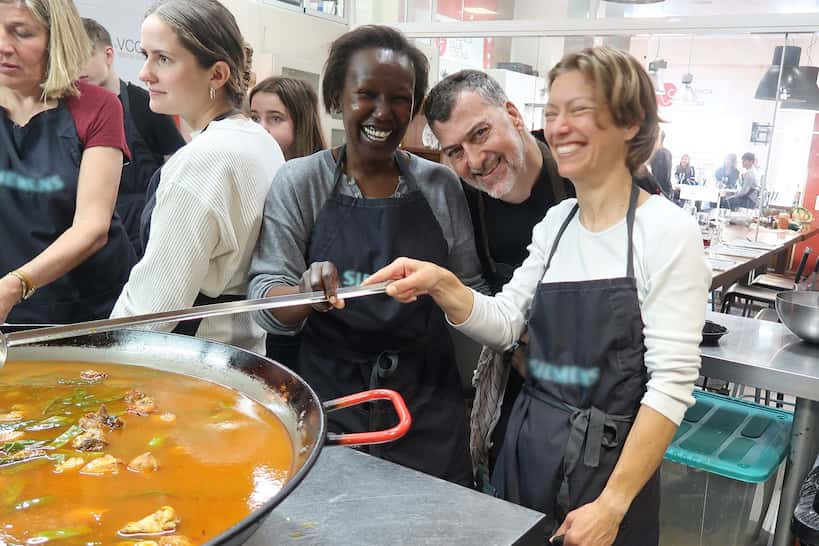
Learning to make paella was the highlight of the Valencia cooking class experience.
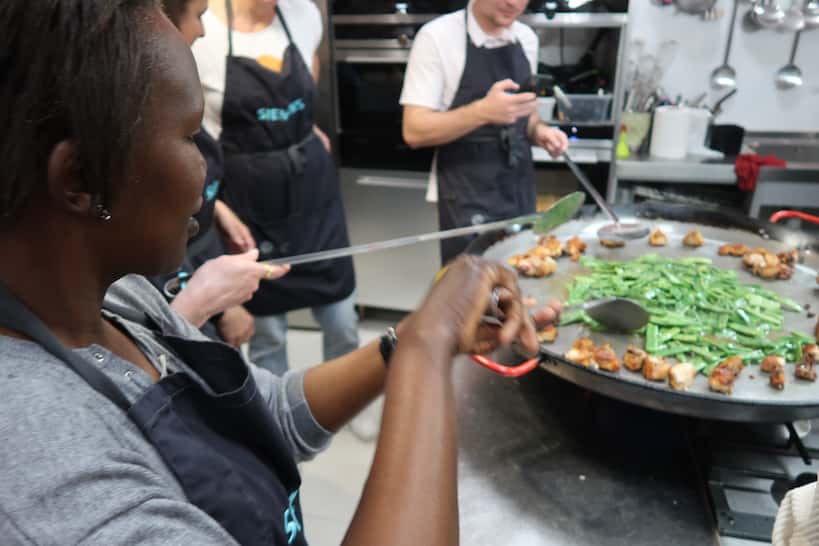
As we gathered around the massive paella pans also known as “paelleras,” the chefs introduced us to the ingredients and history of Valencia paella.
The traditional recipe for paella in Valencia calls for rabbit, however, in our cooking class we used only chicken. This was a deliberate decision, as some people might not be comfortable eating rabbit.
Flat green beans, known locally as “ferradura” or “ferraúra” and Valencia lima beans known as garrafó beans were some of the other key ingredients.
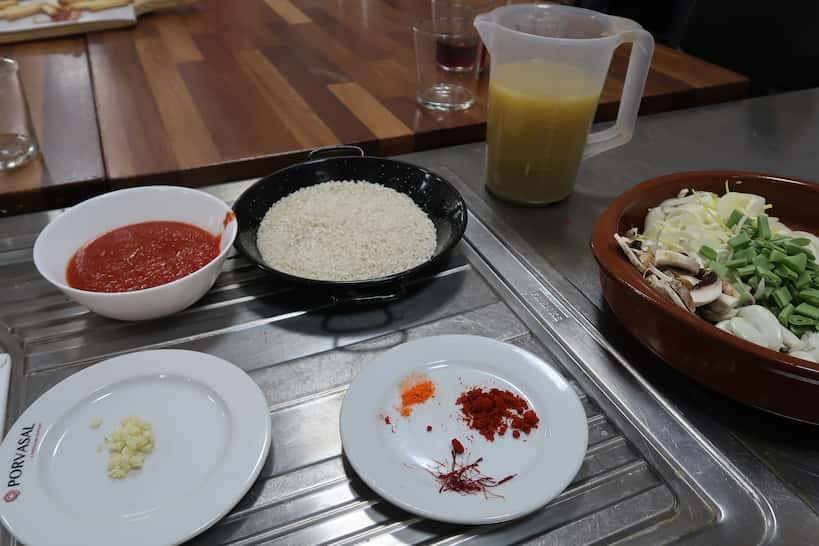
The rice for Valencia paella comes from the rice fields in the Albufera de València Natural Park.
Located just south of Valencia city, Albuefera is one of the largest rice producing area in Europe.
Rice in Valencia is an integral part of the local identity. The rice for paella is a short rice protected under The Designation of Origin “Arroz de Valencia.”
This rice, we learned is great for absorbing flavor and is resistant to over-cooking.
AUTHENTIC FOOD QUEST TIP: Another way to explore the local specialties in Valencia is by taking a food tour. See our guide to the 7 Best Valencia Food Tours For Amazing Paella, Wine and Tapas
Valenciana Paella Cooking Techniques
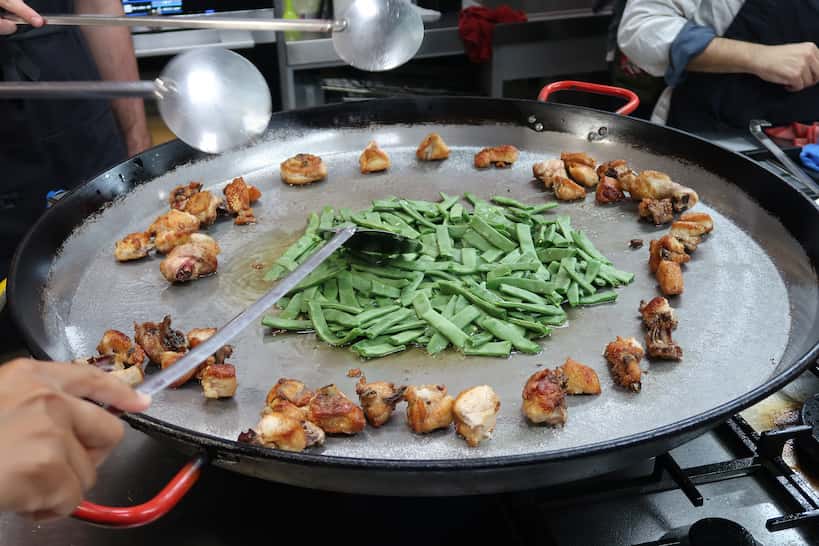
Traditionally, in Valencia, paella is cooked over a charcoal fire. In our Valencia cooking class, we cooked made the paella in oversized paella pans, over three ring gas burners.
The gas burners with three independent concentric rings of flames, control the heat for even cooking.
It was interesting to learn that the ingredients are first cooked in the middle of the paella pan, and then moved over to the sides.
Another tip we picked was associated with saffron. While the saffron enlivens paella with unique flavors and aroma, it also plays an important role in adding color to the paella.
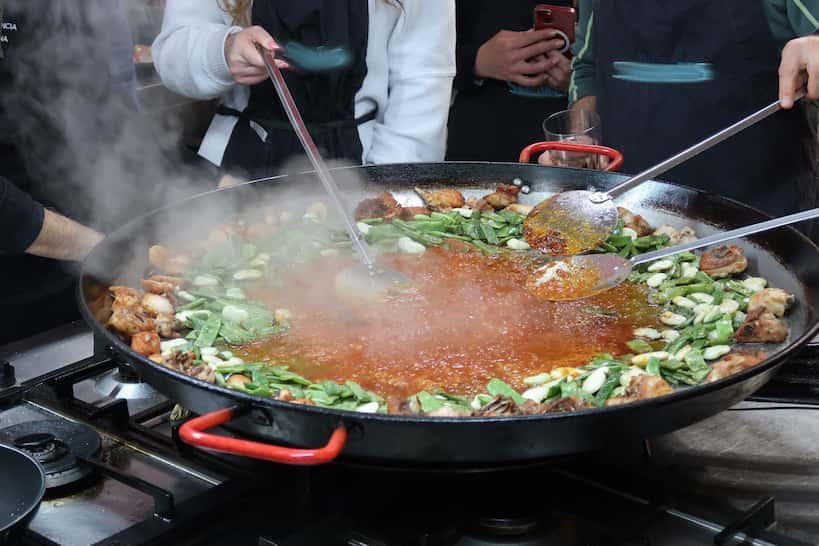
Our chef, Luis, told us the story of how when you are sick in Valencia you are given white rice. As a result, white colored rice is considered boring and associated with illness.
The saffron adds color to the paella making it festive, celebratory and upbeat.
While listening to the stories about paella, we all took turns cooking the ingredients in a step by step process.
It was a communal activity where everyone’s participation was valued.
Making paella, we found, is actually more difficult than it looks. It’s all about skill, experience and knowing how to manage the concentric rings of fire.
Spanish Valenciana Home Made Lunch
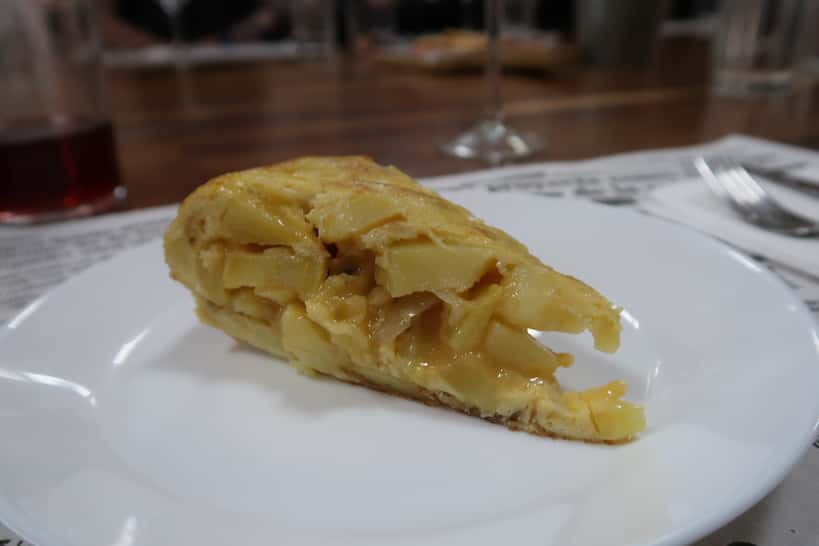
The best part about taking a cooking class is eating the meal you make. As the kitchen was buzzing with activity, the tantalizing aromas from the dessert, Spanish omelet and paella, filled the air.
Stomachs rumbling and hungry, we sat down to a lot of food. We started out with thick slices of Spanish tortilla, cooked to perfection.
The star of the show, the Valencia paella was suculent. It was moist, incredibly flavorful and the rice cooked to perfection.
We loved that you could serve yourself as much as you wanted and several of us went back for second helpings.
The Coca en Llanda sponge cake, served with a scoop of Leche Merengada ice cream from Valencia was the final sweet touch to the cooking class.
Overall Impressions Of The Paella Cooking Class
What We Loved
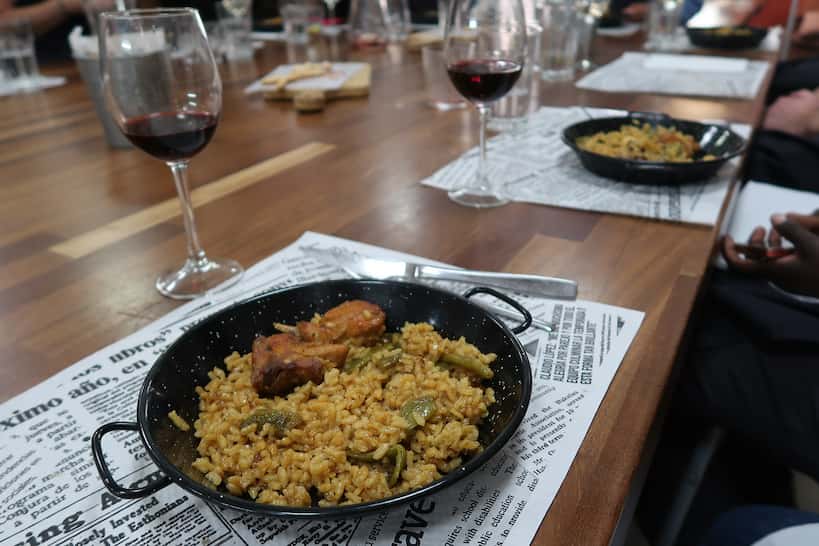
Taking a paella cooking class in Valencia is a great way to learn about this iconic Spanish dish.
We enjoyed our Valencian paella cooking class for a variety of reasons.
- Learning techniques for making paella: There’s a lot that goes into making authentic paella from Valencia. In this cooking class, we learned tips and secrets for making exceptional paella. The recipe we received at the end of the class also included substitutions for how to make paella at home.
- Cultural insights about local Spanish and Valencia dishes: Luis, our chef and cooking instructor is from Valencia and he shared a lot of insights about the local food culture. This made for an deeper experience.
- Fun easy class, great for groups: The energy in the class was upbeat and interactive. Everyone participated in making the paella and we were actively moving between stations. Since making paella is a group activity, this cooking class is perfect for families and groups.
- Local market visit: Seeing the local ingredients and even meeting some of the local vendors made for an enriching culinary experience.
What Could Be Improved on this Paella Cooking Class in Valencia
Overall, there was not much that was negative about our Valencian paella cooking class. We loved starting out with a local market visit, and it was well organized and fun.
That said, there are a few points worth noting.
- Not intimate though manageable: All the cooking stations were occupied in our Valencia cooking class. While everyone had individual cooking stations, the experience would have been more intimate in a smaller group size.
- Heavy chef involvement: Making paella takes skill and experience, from managing the 3-ring burner to the timing of the individual ingredients. As a result, the chefs did a lot of the cooking, which may not be hands-on enough for experienced home cooks.
- Challenging kitchen layout: The professional kitchen is set up in a horseshoe shape around the giant paella pans. This setting made it a little challenging to have conversations with others in the cooking class.
READ MORE: 7 Unforgettable Cooking Vacations in Spain
How To Book Your Valencia Cooking Class
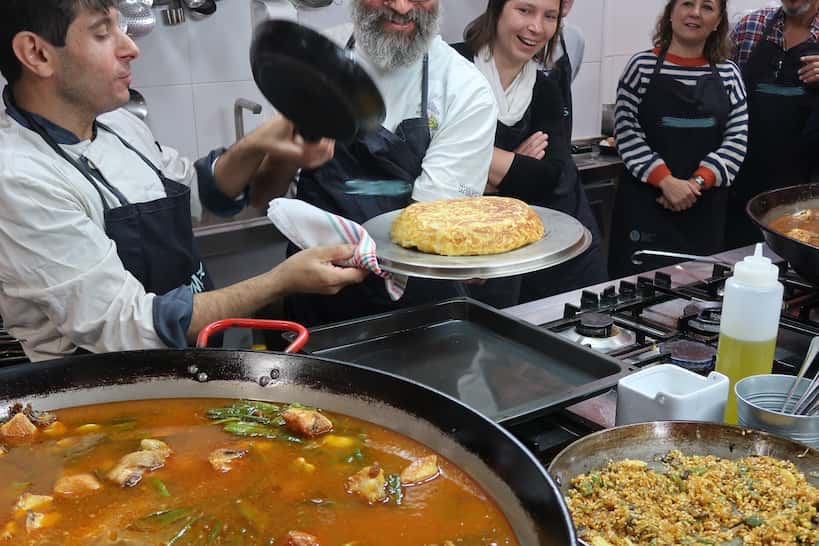
This cooking class in Valencia with market visit is a delicious way to learn the secrets of paella with professional chefs.
It’s a fun experience where you’ll spend about 2.5 hours learning to make an appetizer, paella and a local dessert.
There are two classes offered, one at 11:00 am and the other at 7:00 pm. We recommend taking the morning class so that you can visit the local market and pick up the ingredients.
Regardless of whichever class you choose, this Valencian paella cooking class will no doubt be one of the highlights of your visit to the region.
Watch Our Valencia Cooking Class YouTube Short
Make sure to subscribe on Youtube for our latest videos
Alternative Cooking Classes to Consider
If you are looking for paella cooking classes that offer more variety, here are two other Valencia cooking classes we recommend.
AUTHENTIC FOOD QUEST TIP: If your travels take you to Madrid and you’d like to learn how to make authentic paella, we recommend this cooking class. This Spanish cooking class in Madrid with a market visit features learning to make paella and tapas. In this 3.5 cooking class with a local chef, you’ll learn to make traditional Valencian paella and other delightful Spanish foods.
Evening Paella Cooking Class With Sangria
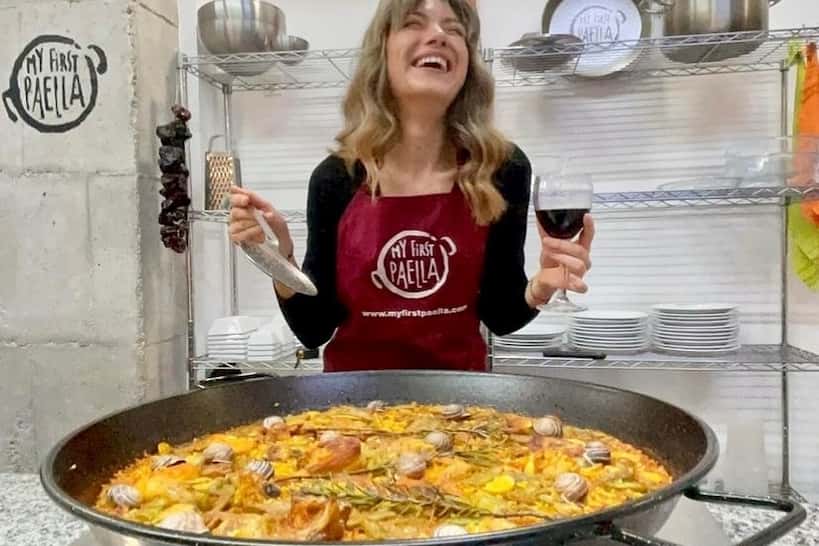
This paella cooking class with sangria takes place in the popular and hip Ruzafa (Russafa) neighborhood.
It’s an evening class that starts at 5:00 pm and runs for about 3 hours. Before diving into making paella, you’ll start by making Sangria, one of Spain’s most popular drinks.
What To Expect From This Paella Cooking Class
Some of the key highlights from this class include:
- Learning to make Valencian paella and Sangria
- Cooking class experience includes also includes tapas, desserts, and local wines
- Learning about the local culture and cuisine
What People Say
This paella cooking class is described as “being a great experience”. The instructors are praised for being “fabulous, great fun, while offering clear and detailed instructions.”
Cooking class participants also say they had a blast putting the dish together and “learning the techniques that making Valencia’s paella so special.“
Seafood Paella Cooking Class
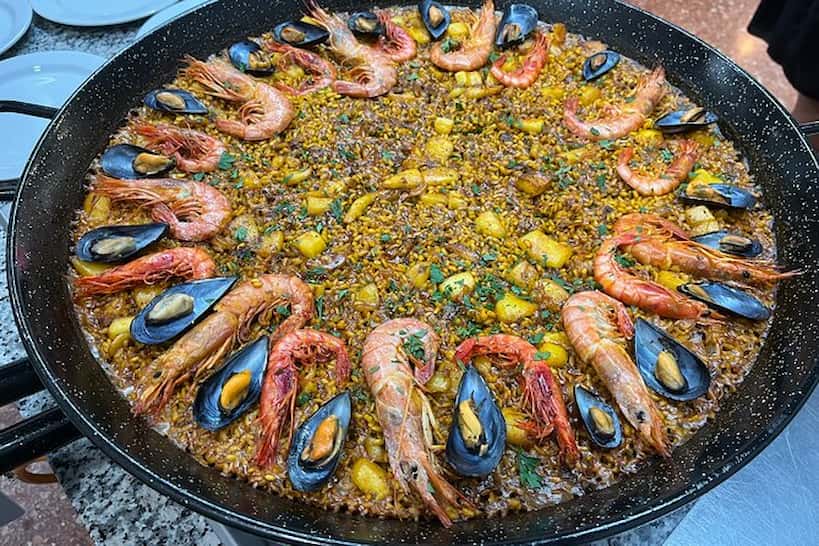
This seafood paella cooking class puts a twist on the traditional Valencia paella recipe.
Authentic paella from Valencia does not contain any seafood and in this cooking class you’ll be making rice with seafood.
This 3.5 hour cooking class starts with a visit to a nearby local market (except on Sunday) to learn about and pick up the ingredients. In addition to making seafood paella, you’ll also enjoy tapas and dessert.
What To Expect From This Valencia Cooking Class
Some of the key highlights from this class include:
- Visit to a local market
- Learning the intricacies of making paella with seafood
- A complete experience with tapas, desserts, Sangria, wine and more.
What People Say
Travelers recommend not missing this cooking class experience. It is described as a “great experience, great fun and a must do in Valencia.“
The instructors are described as “funny, informative and very knowledgeable“. Based on the class, some travelers are already planning a paella party in the near future.
Have you ever taken a cooking class in Valencia or anywhere in Spain? Please let us know in the comments below.
Savor the Adventure!
More Local Food Experiences and Recipes
10 Best Food Tours in San Sebastian for a Gastronomy Feast
San Sebastian Food Guide: 12 Must-Try Basque Dishes And Culinary Experiences
Savor Madrid: A Must-Read Food Tour Review
10 Best Restaurants in Costa Brava For Authentic Catalan Food
5 Best Wineries in Costa Brava For Amazing Catalan Wine Tasting
Unleash Your Inner Chef By Taking a Cooking Class on Your Travels
Love This Paella Valencia Cooking Class? Pin It!

Rosemary Kimani is the co-founder and editor-in-chief at Authentic Food Quest, where she helps travelers connect with cultures through food and immersive cooking vacations. Since 2015, she and her partner, Claire, have explored the cuisine of 45 countries and 290+ food cities. Her work has been featured in Lonely Planet, Business Insider, Huffington Post, and more. A co-author of three books, including a collaboration with Costa Brava Tourism, she blends storytelling with culinary exploration. When not discovering new flavors, she’s an avid runner, having completed eleven marathons. Previously, she held senior strategy roles in advertising.